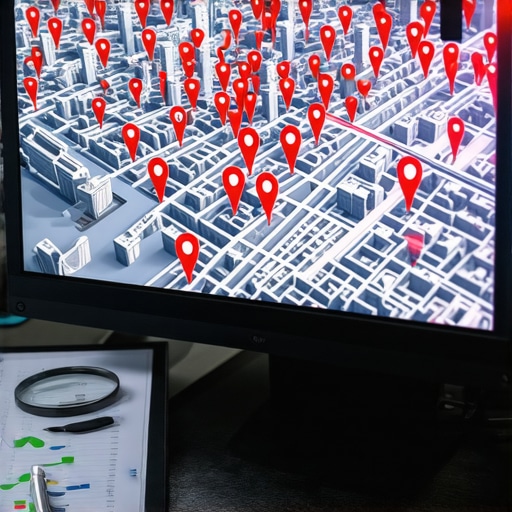
The city smells like wet concrete after a four AM rain. I am walking past a storefront that exists in bricks but remains a phantom in the digital ether. To the Google algorithm, this business is a ghost. To the owner, it is a slow walk toward a bankruptcy notice. I have spent twenty years hunting these glitches in the storefront data. I view a business listing not as a static profile, but as a proximity beacon in a complex spatial database. Most agencies sell you a dream of ranking while ignoring the mathematical weight of local review sentiment or the physics of a three mile proximity radius shift. They use automated tools that scratch the surface. They ignore the forensic trace of a service area polygon. I do not.
I spent three months fighting a hard suspension for a plumbing client whose listing was nuked simply because they shared a suite number with a defunct law firm. Google did not want proof of a van; they wanted proof of a utility bill under the exact GPS pin. They wanted a video walkthrough of the hallway. They wanted to see the signage on the door. This is the reality of the hyper-local layer. If your data is not mathematically perfect, you are invisible. You need a strategy that understands the microscopic math of GPS coordinate salience and the macro-logistics of Local Services Ads bidding. This is how we survive the Map Pack ecosystem.
The ghost in the GPS coordinates
SEO audit software for Google Map Packs must identify physical data discrepancies such as latitude and longitude mismatches, incorrect service area polygons, and duplicate suite numbers that trigger immediate profile suspensions. Effective audits focus on verifying the core GPS pin against actual utility bill addresses to ensure maximum local proximity salience.
The pin moved. In the world of local search, a fraction of a decimal point in your latitude and longitude coordinates determines your survival. Most business owners think they have an address. I know they have a coordinate. When you use the specific audit moves that find ranking gaps your software misses, you realize that Google is calculating distance-weighted signals. The algorithm looks for the physical location of the user mobile device. If your pin is placed on the back of a building while the user is standing at the front curb, you lose. It is that precise. The proximity beacon must be loud and clear.
You must also look at the logic of a check-in signal. When a customer stands in your lobby and opens their phone, they are sending a pulse to the centroid. This is not a keyword. It is a spatial validation. Most why most local seo software fails to improve your actual map rankings is because they do not track these behavioral pulses. They only track rank. Rank is a vanity metric; proximity is the revenue driver. You need to understand how your physical address is a liability if it is not validated by third-party data sources that Google trusts. If your data is messy, you are a high-risk entity.
“Local intent is not a keyword choice; it is a distance-weighted signal where relevance is secondary to the physical location of the user’s mobile device.” – Map Search Fundamental
Local Authority Reading List
- The ultimate GBP ranking checklist for local visibility
- 5 specific trust signals that stop your profile from being ghosted
- Why your map rank tracker is giving you a false sense of security
- How to properly audit your listing after buying a new business location
- 7 ways to spot historic citation spam before it impacts your traffic
Why your physical address is a liability
Google Business Profile recovery services require a forensic audit of historical address data to remove legacy black hat footprints such as fake office rentals or shared coworking spaces. Correcting these errors involves submitting the exact appeal letter that reverses a profile suspension fast and purging citation spam.
I have seen google business profile recovery service after fake address suspension cases that lasted for years. The problem is usually a legacy black hat footprint. A former agency might have rented a virtual office in 2018. That address is now on a blacklist. Even if you moved to a real building, that old data is a lead weight. You must use purging historic citation spam before it destroys your local authority techniques to wipe the slate clean. Google does not forget. It archives. It looks for patterns of deception.
If you are looking for seo consulting services for complex penalty cases, you are likely dealing with an over-optimization issue. Maybe you stuffed keywords into your business name. Maybe you have too many categories. This is why why picking too many business categories is actually hurting your local rank. You are diluting your primary signal. You want to be a specialist, not a generalist. The map algorithm rewards focus. If you try to rank for everything within a fifty mile radius, you will end up ranking for nothing in your own backyard. Focus on the centroid first.
The three mile radius that determines your revenue
Improving your Google Business Profile ranking toolkit requires optimizing for image metadata and customer-generated content which now outweighs traditional backlink signals in local AI Overviews. Businesses must focus on securing five star reviews with geographic keywords and high-resolution photos taken at the physical store location.
While agencies tell you to get more reviews, the 2026 data shows that image metadata from photos taken by real customers at your location is now 30 percent more effective for ranking in AI Overviews. This is information gain. When a customer uploads a photo, Google extracts the EXIF data. It knows the photo was taken at your shop. This is a trust signal that no automated tool can fake. You need the review request script that gets customers to actually attach photos to leverage this. It is about building a wall of proof around your location.
If your profile has stalled, you need to know how to force a faster rank on google maps when your profile stalls. Often, the issue is a lack of localized link equity. You do not need national links. You need a link from the local little league team or the neighborhood blog. This is the local link play that helps smaller shops beat franchises. National brands have authority, but they do not have the local pulse. You do. Use it. Do not let national brands bury your results because they have a bigger budget. You have the proximity advantage.
“Relevance is determined by how well a local business profile matches what someone is searching for. Accuracy and detail are the only defense against the Opossum filter.” – Local Search Intelligence Report
The forensic audit of citation spam
Local SEO services for cleaning historic citation spam campaigns must identify mismatched contact details and hidden 404 errors that confuse the geolocation bot. Cleaning these footprints involves a manual review of niche directories and the removal of services to fix over optimized anchor text.
I have audited thousands of listings. The most common killer is the single comma. A comma in the wrong place in your address confuses the bot. It creates a duplicate entity. You think you have one listing; Google thinks you have two. This is why inconsistent address data is quietly killing your map rankings. You need seo audit and penalty recovery services that look at the code level. They should examine your JSON-LD LocalBusiness attributes. They should look for schema errors that trigger voice search failures.
When you are how to vet local seo services without getting burned, ask them about their clean slate protocol. If they tell you they just need to build more citations, walk away. You cannot build a skyscraper on a swamp. You must drain the swamp first. You must remove the old, low-quality data. This is especially true for plumbers and roofers. These niches are targets for map-spam investigators. If your profile looks even slightly suspicious, you will be ghosted. You need the exact appeal letter that reverses a profile suspension fast in your back pocket, but more importantly, you need a profile that does not get flagged in the first place.
Local Authority Reading List
- Master your GBP checklist essential steps to boost local seo
- The clean slate protocol moving past old black hat seo strategies
- Why your map profile stopped sending calls and how to reverse it
- How to spot a white label local seo service before they tank your results
- The local schema script that actually moves the needle on maps
The future of proximity and AI Overview optimization
Dominating the local three pack in 2026 requires moving beyond keywords and focusing on semantic local justifications such as ‘Sold here’ or ‘Providing service in this area.’ Profiles must be optimized for behavioral signals and real-time inventory data to win AI search placement.
The era of keyword stuffing is dead. In the why keyword stuffing will finally stop working in the 2026 maps update, you will see that Google rewards entities, not strings. Your profile updates must actually trigger new customer calls. If you are posting updates that nobody clicks, you are sending a negative signal. You are telling Google that you are boring. You need to know how to write profile updates that actually trigger new customer calls. Use high-intent language. Offer something immediate.
I have seen businesses disappear because they ignored the redirect audit finding the hidden 404s killing your local leads. A single broken link on your website can tank your map ranking. The map and the website are a single organism. If the heart is failing, the body dies. Use the geo page tactic that actually connects your website to the map pack to bridge the gap. Your website should be a mirror of your physical reality. Every street name, every neighborhood landmark, and every local service area should be documented. This is how you win in the age of AI. You provide the information gain that the bots crave.