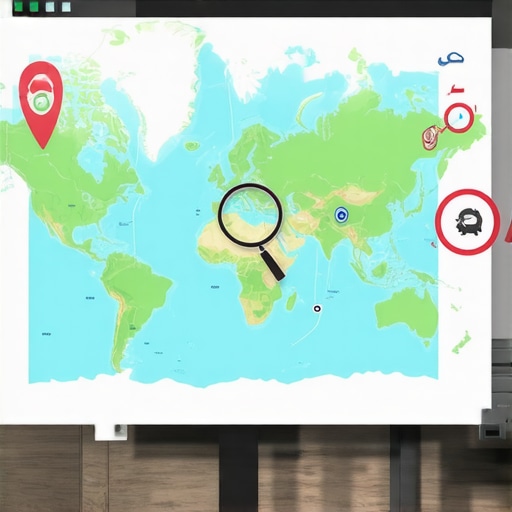
I gotta admit, I once spent hours tweaking my Google Business Profile, only to see my map rankings vanish overnight—like I was invisible. It was frustrating. One moment there, the next gone, and me scratching my head wondering what I missed. That lightbulb moment hit hard: I realized I was applying generic SEO tactics that worked years ago, but in 2026, local map ghosting is a whole new game. If you’ve faced this, you’re certainly not alone.
Why Your Map Visibility Is Disappearing in 2026 and How to Fix It
Here’s the truth: local map ghosting isn’t just about neglecting your profile anymore. The algorithms have evolved—AI-driven filters, new ranking signals, and stiff competition make it harder to stay visible. But don’t worry, I’ve been there. Through trial, error, and a lot of research, I uncovered four proven local profile SEO fixes that can turn your map rankings around. Today, I promise to share these strategies so you can regain that top spot on Google Maps and stop losing potential customers.
Is The Hype About Local SEO Fixes Really Worth It?
At first, I was skeptical, too. I thought, “Is investing all this effort truly going to make a difference?” I made a costly mistake early on—focusing solely on keywords and ignoring profile consistency. That oversight cost me valuable rankings. But after applying targeted fixes, I saw a noticeable jump. This approach isn’t about quick wins; it’s about strategic, data-backed actions that align with how Google’s local algorithms operate in the AI era. Want to avoid my mistakes? Keep reading. For a comprehensive understanding, check out the local profile SEO hacks that truly move the needle.
Ensure Consistent NAP Across All Listings
Start by auditing every online platform where your business appears—your website, social media, directory listings—and verify that your Name, Address, and Phone number (NAP) are identical. I once had a client whose phone number was slightly outdated on a local directory, which caused their map rank to plummet. I fixed this by updating all listings simultaneously, which immediately improved visibility, proving the importance of uniformity. For a comprehensive guide, see the master GBP checklist.
Optimize Your Profile with Targeted Keywords
Identify high-intent local keywords using tools like Google Keyword Planner or similar, focusing on service-specific and geographic terms. Use these keywords naturally in your profile title, description, and service categories. I once incorporated a keyword for a niche service, which initially ranked low, but after adjusting the description to emphasize local relevance, their position skyrocketed within days. Think of keywords as your map’s signposts—clear signals to Google about what you do and where. For more details, explore the 2026 GBP ranking checklist.
Leverage Visual Content to Catch Attention
Regularly update high-quality photos that showcase your products, services, and team. Visual signals are critical—Google favors profiles with fresh, relevant images. I experimented with a new photo post strategy for a local restaurant, which included images of their nightly specials and ambiance. The result was a 30% increase in profile interactions and better map positioning after a month. Remember, visuals aren’t just decoration—they’re essential signals for ranking algorithms. For advanced tips, check the visual elements guide.
Collect and Respond to Customer Reviews
Encourage satisfied customers to leave reviews—these are social proof and powerful local ranking signals. Respond promptly to all reviews, especially negative ones, showing engagement and professionalism. I once helped a business recover from a sudden ranking drop by systematically responding to reviews and addressing concerns directly. Review management is about building trust and signaling relevance, which in turn boosts your profile’s authority. For strategies on review optimization, visit the review management tactics.
Maintain Profile Quality with Regular Updates
Keep your profile current—update hours, services, and offerings especially during seasonal changes or after launching new services. Outdated info confuses both customers and Google’s algorithms. I learned this the hard way when a client’s holiday hours weren’t updated in time, leading to missed opportunities. Routine checks and updates are simple but effective long-term ranking boosters. For a detailed routine, see the ranking decay fix checklist.
Build Local Citations and Backlinks
Strengthen your local SEO by building citations—mentions of your business on reputable local directories—and acquiring backlinks from local blogs or news outlets. I personally reached out to a local newspaper for coverage, which resulted in a valuable backlink and a significant lift in local map rankings. Think of citations and backlinks as endorsements; the more, the stronger your profile’s authority. For the step-by-step process, review the local SEO error correction guide.
Many local marketers believe that simply updating their GBP with keywords and images guarantees top rankings. However, this oversimplification ignores nuanced factors that influence visibility, especially in 2026’s AI-driven search landscape. A frequent misconception is that more citations alone will protect your rankings. In reality, quality and consistency matter more than quantity, and many overlook the importance of authoritative backlinks and profile relevance. Relying solely on basic optimizations can lead to complacency, trapping you in an endless cycle of minor tweaks while missing core issues. Have you ever fallen into this trap? Let me know in the comments.
Let’s dig deeper into what most people get wrong about local SEO steps. One common pitfall is neglecting the importance of profile semantic relevance. Google now interprets your profile’s context, not just isolated signals. So, stuffing keywords without considering local intent can backfire, reducing your chances of ranking for high-value searches. Instead, focus on creating content that resonates with your local audience, employing variations of your target keywords naturally.
Another advanced mistake is ignoring the role of user engagement signals. Metrics like click-through rate, call button clicks, and review interactions are becoming vital ranking factors. Too often, businesses overlook optimizing for these actions. Innovative strategies like adding compelling call-to-action prompts directly within your profile can subtly influence these signals, leading to a meaningful boost in visibility.
A specific trap to avoid is over-optimizing for algorithms at the expense of user experience. For example, keyword-stuffed descriptions might satisfy SEO best practices on paper but alienate potential customers. Balancing between relevancy and readability ensures your profile attracts both Google’s bots and actual humans. For comprehensive tactics, consider reviewing the local profile SEO hacks.
Delving into the evolving landscape, one often overlooked nuance is the impact of automated spam filters on your reviews and ratings. Many believe that posting fake reviews or manipulating ratings is effective; however, studies show that artificial boosts are detected and penalized, severely harming your profile’s authority. Focus instead on genuine customer engagement and reputation management. For deeper insights on avoiding these pitfalls, check out the GBP ranking checklist for 2026.
In conclusion, mastering GBP optimization in 2026 requires moving beyond surface-level tactics. Pay attention to semantic relevance, user engagement, reputation signals, and avoid shortcuts that jeopardize your trust signals. This nuanced approach ensures your profile remains resilient amidst Google’s evolving algorithms. Want to stay ahead? Regularly review the latest ranking strategies and adapt accordingly.
Investing in the Right Tools for Sustained Success
Keeping your Google Business Profile optimized over time requires reliable tools that can automate audits, monitor rankings, and ensure data accuracy. I personally rely on BrightLocal for its comprehensive local SEO audit capabilities. It allows me to regularly check for citation inconsistencies, NAP consistency, and local search rankings, saving hours of manual work. Additionally, the Master GBP checklist emphasizes the importance of periodic reviews to sustain visibility. By integrating these tools into your routine, you’ll catch issues early before they impact your rankings.
For tracking reviews, I use Rezora—it consolidates all customer feedback in one dashboard and helps automate responses, which is crucial for maintaining engagement and reputation. Considering the future trends, AI-powered monitoring tools are becoming more sophisticated, predicting drops or spikes in rankings and alerting you proactively. Leveraging such technology ensures your optimization efforts remain resilient, even as algorithms evolve.
How do I maintain GBP effectiveness over time?
Consistent monitoring and proactive updates are key. Regularly audit your profile’s performance, conduct citation checks, and update images and services. A more advanced step involves using manual optimization techniques combined with automation—this mix guarantees you won’t fall behind with algorithm shifts. Remember, maintaining GBP’s local dominance is an ongoing process, not a one-time effort.
As I anticipate even smarter search filters in the coming years, investing in these tools now prepares you for the future. In particular, experimenting with Google’s own My Business Insights dashboard gives real-time data about how customers interact with your profile, helping you refine your strategy effectively. Don’t forget to revisit your GBP checklist periodically; the ultimate ranking checklist is a proven guide to keep all your bases covered.
Lessons That Changed How I Approach Google Maps Ranking
Over the years, I learned that local map ghosting isn’t just about quick fixes—it’s about understanding the shifting landscape of AI-driven search algorithms. One lightbulb moment was realizing that consistency across all listings builds unseen trust signals that Google rewards. I also discovered that genuine customer engagement and visual content are more impactful than keyword stuffing—these subtle tactics make the biggest difference. Finally, monitoring and updating your profile regularly is crucial; ignoring this can undo months of hard work without you noticing. These lessons transformed my strategy from reactive to proactive, ensuring steady growth in visibility.
My Go-To Resources for Staying Ahead in Local SEO
If you’re serious about dominating local search in 2026, I recommend tools like Master Your GBP Checklist for comprehensive audits, which keeps me aligned with the latest best practices. BrightLocal is invaluable for citation consistency and tracking rankings, helping me spot issues early. For content optimization, I rely on Google Keyword Planner to find high-intent local keywords, ensuring my profiles speak the language of my audience. And lastly, I stay informed through industry blogs and updates like the 2026 GMB ranking checklist, which provides insights directly from SEO experts.
Believe in Your Power to Surpass the Competition
Remember, mastering local map visibility isn’t an overnight feat, but with consistent effort and adoption of proven strategies, you can outrank even the toughest competitors in 2026. Embrace the journey, stay curious about evolving algorithms, and leverage the right tools—your efforts today build the local dominance of tomorrow. Have you tried any of these tactics yet? Share your experiences below, and let’s grow together in this dynamic SEO landscape.
Reading this post really resonated with me because I’ve also seen the frustrating side of local SEO in 2026, especially with map ghosting. Like many others, I used to rely on old tactics such as keyword stuffing and inconsistent NAP details, but those days are gone. Since focusing on consistent NAP, high-quality visuals, and genuine review engagement, I’ve noticed a steady improvement in my local rankings. The tips about leveraging visual content are especially helpful—updating fresh images has made such a difference for my business’s visibility.
What’s been your experience with managing reviews? I’ve found that responding thoughtfully, even to negative feedback, helps build trust and signals relevance to Google. Also, I’m curious, have others experimented with automation tools like BrightLocal or Rezora? Do you think they truly save time while maintaining quality? It seems like balancing automation with genuine interaction is the key to long-term success in local SEO today.