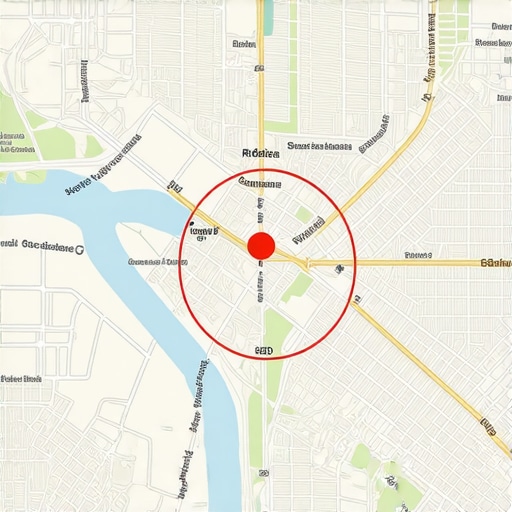
I remember the moment when I first expanded my business’s service area to cover as much ground as possible. I thought, the wider the radius, the better the visibility, right? But soon, I noticed something strange: my Google Business Profile seemed to be losing prominence on local maps. The more I tried to cover, the less visible I became in my target neighborhoods. That lightbulb moment made me realize something important—having a massive service area isn’t always an advantage. On the contrary, it can be a subtle sabotage to your local map visibility.
Understanding the Hidden Cost of Expanding Too Far
Many business owners fall into the trap of believing that a broad service area boosts their chances of appearing across more search results. However, Google’s algorithm behaves differently. It prefers relevance and proximity for local searches. When you set an overly wide radius, you’re essentially telling Google that your business serves areas far beyond your actual reach, which can dilute your relevance signals and hurt your ranking within your core localities.
Ever since I started specializing in local SEO, I realized that focusing on a well-defined, manageable radius yields better results. It’s not about how much ground you cover; it’s about how well you serve your immediate area. This insight led me to a crucial discovery: narrowing your service area can boost your local visibility and drive more qualified leads.
Are you struggling to get your profile to rank higher in your community? Have you expanded your service area too much and wondered why your visibility isn’t improving? If so, you’re not alone. Many have faced the same challenge, and understanding the relationship between your service radius and map visibility is key.
According to a recent study by Moz, relevance and proximity are the top factors influencing local search rankings. Excessive service area coverage can send mixed signals, making it harder for Google to determine where your real audience is. For an in-depth guide on optimizing your local profile to enhance visibility, check out our comprehensive local profile SEO hacks.
In the next sections, we’ll dive into practical steps to help you refine your service areas and boost your map visibility—no more guesswork, just proven strategies tailored for local success.
Pinpoint Your Core Community
Start by analyzing your current service radius. Use Google Maps to identify the neighborhoods you serve best, and then set a radius that encompasses these areas without stretching too far. For example, if your shop sees most customers within a 5-mile radius, keep your service area confined accordingly. This focus enhances relevance signals, boosting your Google Business Profile ranking.
Leverage the Radius Settings Effectively
Access your Google Business Profile and locate the service area section. Instead of sliding the radius to cover a broad region, manually enter specific cities or neighborhoods. Consider using local landmarks or ZIP codes instead of vague broad zones. Concrete entries give Google clearer signals, reducing confusion about your actual service zones.
Regularly Review and Adjust Based on Data
Monitor your profile insights weekly. If you notice most of your clicks and calls coming from certain areas, refine your service area to focus exclusively on those zones. Tools like call tracking and Google My Business insights reveal where your engagement is strongest. Adjustments ensure your profile stays relevant to the audiences most likely to convert.
Use Local Keywords to Strengthen Relevance
Incorporate specific local keywords in your business description, services, and posts tied to your chosen neighborhoods. For example, “Best plumber in Downtown Springfield” or “Affordable dental care in Maple City.” This hyper-local focus aligns your profile with targeted searches, reinforcing your relevance and improving your map visibility.
Implement Geotargeted Content
Create posts, offers, or updates specifically mentioning the neighborhoods within your refined service area. This signals to Google where your focus is and helps your profile attract searches within those localities. Over time, this targeted approach enhances your prominence for your core audience.
Avoid Overextending Your Service Area
Remember, attempting to cover too many areas dilutes your relevance signal. I once tried expanding my own profile to include distant suburbs on a whim, thinking it would generate more leads. The result? A decline in local map rankings. Instead, consolidate your efforts on a manageable radius, perfect your profile in those areas, and watch your visibility improve.
Consistently refining your service area with specific geographic markers and localized content creates a stronger connection with your community. This not only boosts your position in local search results but also attracts higher-quality leads that are more likely to convert.
Many local marketers believe that optimizing their Google Business Profile (GBP) is simply about filling out basic information and adding a few photos. However, this superficial approach often leads to misguided efforts and missed opportunities. In reality, the nuanced aspects of GBP management can significantly impact your local rankings, yet they’re frequently misunderstood or overlooked. For example, a common myth is that more reviews always mean higher rankings; while reviews are important, their relevance, recency, and keyword inclusion matter equally, as detailed in expert guides. Additionally, inexperienced users sometimes think that keyword stuffing in business descriptions boosts visibility—that’s a trap that could trigger spam filters and hinder your rankings instead. Real ranking success hinges on strategic content, authoritative citations, and ongoing engagement, not just keyword density.
Why does overly broad service area setting hurt your local visibility?
A significant misconception in GBP optimization is that expanding your service area endlessly will attract more customers. In practice, Google prioritizes relevance and proximity. When you set an excessively large or vague service radius, Google’s algorithm struggles to associate your profile with specific local searches, diluting your relevance signals. This can cause your profile to rank lower in your core service zones despite the increased coverage, which is counterproductive. Focus instead on carefully curated, community-specific service areas; this targeted approach improves local relevance, ultimately elevating your map rankings.
Another advanced nuance involves the importance of local citations and NAP consistency. Too many assume that just listing your business on multiple directories is enough. However, citations must include consistent Name, Address, and Phone Number (NAP) details across platforms to be authoritative in Google’s eyes. Discrepancies or outdated info can confuse the algorithm and hinder your rankings. This insight is supported by Moz’s local SEO research, which underscores the combined influence of citations, reviews, and on-page signals.
Furthermore, neglecting user engagement signals like Q&A management and post updates can result in missed ranking opportunities. Keeping an active presence—responding to questions, posting relevant offers tied to local events—serves as ongoing relevance validation for Google. This proactive strategy demonstrates authority and community involvement, key factors frequently misunderstood by beginners.
Have you ever fallen into this trap? Let me know in the comments. Remember, mastering these nuanced aspects of GBP optimization is what separates top performers from the rest. For comprehensive strategies that go beyond basic setup, explore our detailed local profile SEO hacks and stay ahead with proven tactics.Maintaining a thriving Google Business Profile requires the right set of tools and a strategic approach. I personally rely on dedicated local SEO software like BrightLocal and Whitespark to monitor citation consistency and track local rankings over time. These tools provide real-time data, enabling me to identify fluctuations quickly and adjust strategies proactively. For example, BrightLocal’s citation tracker helps me spot inconsistencies in NAP details across directories, which can seriously harm your local SEO if ignored. Additionally, I use Google’s own tools like Google Analytics and Search Console to assess traffic sources and user behavior, ensuring my efforts translate into actual leads. I also recommend SEMrush for tracking keyword rankings, especially for local search queries, so you can see how your profile stacks up against competitors in specific neighborhoods.
Biggest Mistakes That Taught Me How Not To Do It
I underestimated the power of precise service areas early on, thinking broader coverage meant better visibility. That lightbulb moment revealed how overextending dilutes relevance and hampers rankings. Focusing on a well-defined zone sharpened my local signals and boosted map rankings.
Another lesson was neglecting local content. Incorporating neighborhood-specific keywords and posts directly impacted relevance. It became clear that engaging your community with tailored messaging builds trust and signals authority to Google.
Lastly, I realized that ignoring citation consistency and user engagement metrics hampered my efforts. Keeping NAP data uniform across directories and actively managing reviews and Q&A proved crucial in strengthening my profile’s relevance and visibility.
Comments are closed.