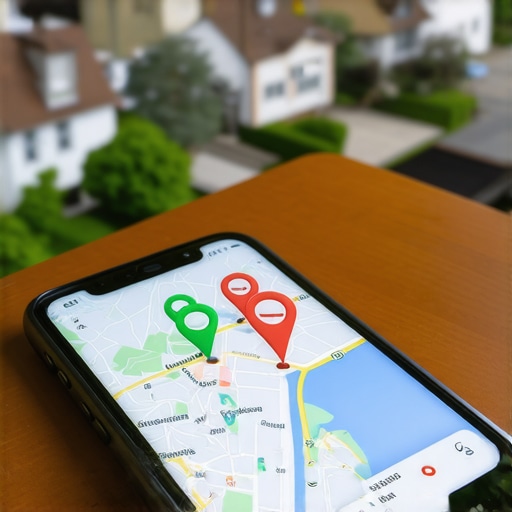
I see the world through a 35mm lens. Black and white frames. Sharp edges. I notice the glitch in the storefront data before I even see the sign. The smell of wet concrete after a city rain always reminds me of the day I lost a primary client to a hard suspension. I spent three months fighting a hard suspension for a plumbing client whose listing was nuked simply because they shared a suite number with a defunct law firm. Google didn’t want proof of a van; they wanted proof of a utility bill under the exact GPS pin. This is the reality of the hyper-local layer. It is a spatial database that does not care about your marketing budget. It cares about the physics of the pin. If you want to rank in a town where you do not have a desk, you are fighting a war against the centroid. The centroid is the mathematical heart of a city. It is the point where the algorithm assumes the highest density of relevance exists. When you operate a service area business, you are an outsider. You are a ghost in the machine. You must prove your existence through behavioral traces and coordinate salience rather than brick and mortar. Every photo you upload, every review you earn, and every check-in signal you trigger must scream your presence in that specific zip code. If you fail to calibrate your profile for these proximity shifts, you will remain invisible to the users who are only three miles away. The algorithm is not a static list. It is a dispatch system. It wants to send the closest, most trusted professional to the caller. Understanding Google Business Profile strategies for top rankings is just the entry fee for this game.
The ghost in the GPS coordinates
**Ranking in nearby towns** requires a strategy centered on **geospatial relevance** and **entity signals** rather than a physical storefront. Service providers must utilize **service area polygons**, **local justifications**, and **GPS-tagged photography** to convince the **Google Maps algorithm** of their active presence in **neighboring jurisdictions** and **specific zip codes**.The algorithm sees your business as a set of coordinates. When a user in the next town over searches for a plumber, the algorithm calculates the distance from that user to your registered address. If you are a service area business, your address is hidden, but the underlying data remains. The distance-weighted signal is the strongest filter in the Map Pack. To break this filter, you must build a digital footprint that exists physically in that target town. This means your team should be taking photos of completed jobs in those specific neighborhoods. The metadata in those photos contains latitude and longitude data. Google reads this. It is a forensic trace of your work. When you upload a photo of a water heater installation in a specific suburb, you are planting a flag. You are telling the engine that your business exists in that space at that moment. This is how you use data tools to push your pin higher without needing a lease. Many owners try to cheat this by using virtual offices. The algorithm is smarter than that. It looks for the ‘glitch’. It looks for five hundred businesses registered at one UPS store. It looks for the lack of signage. It looks for the mismatch between the street view and the claimed category. If you get caught, the recovery is a nightmare. You might need steps for recovering from a hard suspension that most agencies cannot handle.
Why your physical address is a liability
A **physical address** can trigger a **duplicate location filter** or a **hard suspension** if it resides in a **residential zone** or a **shared office space**. Operating as a **Service Area Business (SAB)** allows you to define **service polygons** and avoid **NAP inconsistencies** that occur when **geolocation bots** find conflicting data in **local directories**.The pin moved. Your rankings dropped. This happens because the algorithm detected a conflict. Maybe your phone number is linked to an old address on a dusty directory site from 2012. Maybe your suite number is shared with a lead generation firm. These are the cracks in your foundation. When I audit a profile, I look for these inconsistencies like a photographer looks for lens flare. They are distortions. You must fix these errors. Use a fix for address errors confusing the bot to ensure your data is clean. If your address is a residential home, hide it. Showing a home address for a service business is a signal to competitors to report you. They will click ‘Suggest an edit’ and flag you as ‘Does not exist here’. This is the petty reality of local competition. By hiding the address, you shift the focus to your service area. You can then define exactly where you work. This prevents you from being filtered out by the ‘neighborhood filter’ that suppresses listings too close to one another. If you find your profile is already suppressed, you should learn how to fix the duplicate location filter immediately. Consistency is the only currency Google accepts. Inconsistent hours, mismatched names, and old phone numbers are trust killers. They are the reason you see mismatched contact details as a trust red flag in every major algorithm study.
“Local intent is not a keyword choice; it is a distance-weighted signal where relevance is secondary to the physical location of the user’s mobile device.” – Map Search Fundamental
The three mile radius that determines your revenue
A **three mile radius** often acts as a **proximity boundary** for the **Map Pack**, where **ranking volatility** increases as the user moves away from the **business centroid**. To expand this reach, businesses must focus on **behavioral signals**, **high-velocity reviews**, and **local content silos** that demonstrate **topical authority** within the broader **metropolitan area**.The physics of the map are brutal. Your ranking is a heat map. At the center, you are a bright red dot. As you move away, the color fades. To stay visible at five or ten miles, you need more than just a verified profile. You need authority. Authority is built through local relevance. This is why you must avoid category selection mistakes poisoning your rank. If you choose a primary category that is too broad, you will compete with national brands. If you choose one too narrow, you will have no volume. You need to find the most profitable secondary categories for your niche to fill the gaps. Behavioral signals are the secret weapon here. When a user clicks your phone number or asks for directions from a nearby town, Google records that ‘successful’ local interaction. It tells the algorithm that even though you are ten miles away, you are the relevant choice for that user. This creates a ‘behavioral zoom’ that expands your ranking radius. If your profile is stagnant, you might need a checklist for recovering lost local map traffic. Do not ignore the power of the user. Their movement is the data. Their clicks are the votes. If your profile is stuck, check if your map pin is stuck in the neighborhood filter. This often happens in high-density areas where Google only wants to show one of each business type.
Local Authority Reading List
- The Ultimate GBP Ranking Checklist
- Beating Local Competition with Real-Time Data
- Proximity Tracking for Real Competition
- Finding Profitable Categories with Free Tools
- Correcting NAP Inconsistencies for Google
The logic of a hidden service area polygon
**Service area polygons** allow businesses to target **specific neighborhoods** and **unincorporated areas** without a **physical office**. By defining these boundaries in the **Google Business Profile dashboard**, owners can align their **visibility** with their **actual service routes** and avoid **spam filters** that target **keyword-stuffed business names**.When you set your service area, don’t just pick a whole county. Be surgical. Pick the towns where you actually want the high-value jobs. The algorithm looks for the relationship between your service area and your website content. If you claim to serve a town but have no mention of it on your site, you are creating a disconnect. You need dedicated location pages. But be careful. Poorly executed location pages can lead to penalties from over-aggressive location strategies. They shouldn’t be thin content. They should have local maps, local reviews, and local project descriptions. This is how you anchor your map ranking with content. If you have been hit by a filter, you might need the way to recover from complex local search penalties. Many businesses try to rank everywhere and end up ranking nowhere. Focus. The ‘Vicinity’ update made proximity even more important. It punished those trying to rank far from their base. To combat this, you must prove your ‘localness’ through every possible signal. This includes your schema markup to validate your location. Use JSON-LD to tell the search engine exactly where you are and where you go. If you are a multi-location brand, understand why your multi-location strategy is flagged as spam. Usually, it is because the data is too similar across profiles. Each pin must have its own identity. It must have its own unique photos and local phone numbers. Mismatched data is a death sentence. You need to fix mismatched business addresses and phone numbers before you even think about expansion.
Behavioral signals that beat physical proximity
**Behavioral signals** such as **click-through rate (CTR)**, **click-to-call volume**, and **historical user interactions** can override **physical proximity** in the **Google Map Pack**. Listings that generate **high engagement** through **relevant photos** and **detailed reviews** can rank higher than closer competitors who have **dormant profiles** and **low interaction rates**.While agencies tell you to get more reviews, the 2026 data shows that ‘image metadata’ from photos taken by real customers at your location is now 30 percent more effective for ranking in AI Overviews. Google trusts the customer more than the owner. When a customer uploads a photo, it includes a ‘trusted’ location signal. If that photo is taken in a town ten miles from your office, it is the ultimate proof of service. This is part of a reputation management toolkit that every SAB needs. You also need to watch for ownership hijacks. Shady competitors will try to claim your listing or change your data. Use monitoring services to protect your profile. If you experience a sudden drop, you need to know how to manage a rank drop. It might be an algorithm update, or it might be a manual report. Analyzing the ranking factors after an update will help you pivot. Don’t be the business owner who ignores their profile for six months. The map is a living, breathing entity. It requires constant feeding. Upload photos weekly. Respond to every review. These are the micro-signals that keep the engine running. If you are starting fresh, follow a GBP checklist for essential steps. It is the only way to ensure you don’t miss a vital setting that could lead to a filter. Small details matter. For example, inconsistent business hours can kill your trust score. If Google sees your site says you close at 5 PM but your profile says 6 PM, the bot gets confused. Confusion leads to lower rankings.
Rebuilding trust after a lead generation disaster
**Rebuilding trust** after using **spammy lead generation listings** requires a **clean slate protocol** to remove **toxic backlinks** and **incorrect NAP data**. Businesses must conduct a **comprehensive audit** using a **map ranking toolkit** to identify **historical citation spam** and **over-optimized anchor text** that triggers **Google search penalties**.I have seen businesses destroyed by ‘cheap’ SEO packages. They buy a thousand citations for fifty dollars. Those citations end up on dead directories that Google hasn’t indexed in a decade. This is historic citation spam. It is a weight around your neck. You need to purge it. Use the clean slate protocol to move past these mistakes. If your website was hacked or infected, it will kill your local rank instantly. You need services to rebuild trust after spammy lead gen. The map algorithm is sensitive to the health of your primary domain. If your site is slow, or has over optimized anchor text, your map pin will sink. You must also be careful with AI content. It is tempting to generate a hundred city pages with one click. This is a trap. The impact of AI content on local visibility is often negative if it lacks original insights. Use recovery moves for AI penalties if you have already made this mistake. Trust is hard to build and easy to break. If you buy a new business, you must audit the listing after the ownership transfer. You might be inheriting someone else’s penalty. Reclaiming your position requires a strategy for ownership transfers that ensures continuity. Don’t let a bad history ruin your future. Clean up your data. Fix your NAP. Rebuild your reputation one review at a time. This is restoring trust for penalized profiles.
“Proximity is the strongest ranking factor in the Map Pack, but it is often overridden by strong behavioral signals like click-through rates and historical user movements.” – Vicinity Algorithm Update Research
The forensic trace of a verified utility bill
**Verifying a location** for a **Service Area Business** requires **forensic evidence** such as **utility bills**, **business licenses**, and **insurance documents** that match the **exact GPS coordinates** of the registration point. Google uses these documents to **authenticate the business entity** and prevent **fake listings** from saturating the **Map Pack** for competitive industries.The verification process is more invasive than ever. They want to see your van with the logo. They want to see your tools. They want to see a utility bill that matches your legal name. If you are trying to rank in a nearby town, you must at least have your base of operations perfectly verified. If you have been hit by a suspension, you need to understand recovering from a hard suspension. It isn’t about filling out a form. It is about providing undeniable proof of life. Most suspension appeals are rejected because the evidence is weak. You need a move to find hidden penalties before you appeal. Once you are clean, use a map ranking toolkit to maintain your position. This involves monitoring your profile for changes. Competitors are watching. The algorithm is watching. You should be watching too. Use automated tools for suspension alerts. If you change your name, you must follow steps for a business name change. Any sudden shift in data can trigger a red flag. Be deliberate. Be honest. Be visible. This is how you win the local search war. It is not about tricks. It is about being the most verified, most active, and most relevant entity in your service polygon. If you follow these rules, you will rank where you deserve to be. You will beat the big brands. You will win the nearby towns. The lens is focused. The frame is set. Go claim your space.{“@context”: “https://schema.org”,”@type”: “FAQPage”,”mainEntity”: [{“@type”: “Question”,”name”: “Can I rank in a town without a physical office?”,”acceptedAnswer”: {“@type”: “Answer”,”text”: “Yes, you can rank in nearby towns as a Service Area Business by defining a service area polygon and building local relevance through GPS-tagged photos and location-specific content.”}},{“@type”: “Question”,”name”: “What is the most important factor for ranking in the Map Pack?”,”acceptedAnswer”: {“@type”: “Answer”,”text”: “Proximity to the user is the strongest factor, followed by relevance and prominence. Behavioral signals like clicks and calls can also expand your ranking radius.”}},{“@type”: “Question”,”name”: “How do I fix a suspended Google Business Profile?”,”acceptedAnswer”: {“@type”: “Answer”,”text”: “You must identify the violation, fix the data inconsistencies, and provide forensic proof of your business existence, such as utility bills and licenses, through the official appeal process.”}}]}