I remember the smell of wet concrete on the night the cafe owner called. It was nearly midnight; the streetlights were flickering over a quiet downtown block. He was shaking because a competitor had dropped twenty 1-star reviews in a single hour. I saw the glitch in the data immediately. The user profiles had no history; they were shells moving through a VPN; yet they were killing a decade of hard work. We had to perform a forensic audit of the user patterns to prove the spam to the Google team. This is the reality of the hyper-local layer. It is not about pretty pictures. It is about spatial math and proximity beacons.
The ghost in the GPS coordinates
GPS coordinates and proximity signals represent the most aggressive ranking factors in Google Maps. Google calculates the physical distance between the user device and the business centroid to determine local pack placement. This geospatial data overrides almost every other SEO signal in high-density markets.
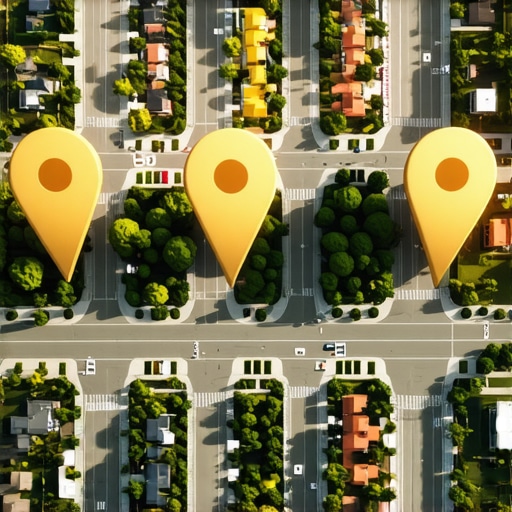
The pin moved. The ranking died. Many owners do not understand that the map pin is a mathematical anchor in a sprawling spatial database. If your pin is even a few yards off, you might find yourself filtered out of the neighborhood results. I have seen businesses lose thirty percent of their call volume simply because a construction project shifted the perceived entrance of their building. You need to understand how to fix your visibility when google moves your map pin or risk falling into a digital void. The algorithm treats the physical location as the primary truth. It weighs the latitude and longitude against the user’s real-time mobile signal. If the math does not align, the business disappears. This is why the proximity tracking moves that reveal real competition are so vital for any local strategy. You must audit the exact spot where Google thinks you exist. Small shops often struggle because they lack a ranking toolkit to beat big brands that have larger proximity footprints. Your reach is a circle. The radius is shrinking as competition increases. You must fight for every foot of that circle.
Why your physical address is a liability
Business addresses serve as entity validators but often trigger profile suspensions if the NAP data is inconsistent. Google uses third-party citations and utility bills to verify location existence. A single suite number mismatch can lead to a hard suspension or ranking drop.
I despise address rentals. They are the rot of the local ecosystem. When you use a virtual office, you are building on sand. The system eventually finds the forensic trace of the shared space. Then the hammer falls. I once watched a top-ranking roofing company vanish because they changed their address and forgot to update a secondary directory. You must know how to handle profile suspensions after an address update before you touch your dashboard. The data must be pristine. Mismatched details create friction in the Knowledge Graph. Google hates friction. If your phone number is different on Yelp than it is on your website, the trust score dips. This leads to why inconsistent business hours and phones kill your local trust in the eyes of the AI. You are an entity; not just a listing. Entities require verification. If you are struggling, look at the fix for mismatched business addresses and phone numbers to stabilize your foundation. The data cleanup is tedious; it is boring; it is the only way to survive a manual review.
“Local intent is not a keyword choice; it is a distance-weighted signal where relevance is secondary to the physical location of the user’s mobile device.” – Map Search Fundamental
The math behind the local review sentiment
Customer reviews and sentiment analysis are behavioral signals that Google uses to rank local entities. High review velocity and keyword-rich feedback improve map pack visibility. Natural sentiment trends are more effective than raw star ratings for AI-driven search results.
Reviews are the pulse of the profile. But not all reviews are equal. The algorithm looks for the specific nouns in the text. It wants to see the word plumbing or emergency or fast. It also looks at the metadata of the person leaving the review. Is their phone usually in this city? Do they have a history of local guides activity? If the answers are no, the review might be filtered. This is why how to spot ai generated reviews that trigger profile penalties is a skill every owner needs. Fake reviews smell like laundry detergent and suspicion. They are too clean. Real reviews are messy. They mention the technician by name. They talk about the parking. If you lose your position, you might be recovering your 3-pack position after a mass review deletion because Google detected a pattern of manipulation. Trust is hard to build but easy to nuke. You need to focus on how to rebuild your local reputation after a mass review removal if you want to stay in the game. The machine is watching the velocity. If you get ten reviews in a day and none for a month, it looks like a scam.
Local Authority Reading List
- Google Business Profile Guide 2025
- The Ultimate GBP Ranking Checklist
- Is Your Map Pin Stuck in the Neighborhood Filter?
- Ranking Tools That Show Real Proximity
- Scrub Toxic Links the Right Way
- Fixing Profile Data Conflicts
The forensic trace of a service area polygon
Service Area Businesses or SABs must define service area polygons to appear in local searches without a physical storefront. Google evaluates service radius based on verified service history and local landing page relevance. Incorrect radius settings cause profile filtering.
Service areas are a trap for the unwary. You think you can just check a box and cover the whole state. You cannot. The algorithm sees your hidden home address as the center of the world. As you move away from that center, your strength fades. This is the real reason your service area business is filtered out of the results. You are overreaching. You need the map data fix that finally validates your service radius to show Google you are actually there. I have analyzed dozens of plumbers who wonder why they do not rank two towns over. It is because their website has no local content for that town. You must use the ranking moves for businesses with no storefront to anchor yourself. The coordinates do not lie. If your trucks are not pinging in that zip code, Google will not believe you serve it. The data must be supported by real world activity. Proximity is a physical constraint; even in a digital world.
“A business location is no longer just an address; it is a vector of historical behavioral signals and verified entity associations stored in the Knowledge Graph.” – Location Intelligence Quarterly
Technical layers that trigger the local justification
Local justifications are snippet extensions that appear in the map pack based on website content and user reviews. Schema markup and structured data help Google connect business services to user intent. Optimized LocalBusiness Schema is essential for voice search.
The data speaks. Google looks for justifications to put you at the top. It pulls from your website, your reviews, and even your photo captions. If a user searches for water heater repair, and your website has a specific paragraph about it, you get a small checkmark in the search result. You must implement the schema markup move that validates your business location to feed the machine. This is not optional anymore. You need to understand the schema tactic for showing your services in the map pack or you will lose to someone with better code. I have seen profiles jump three spots just by adding the geo-coordinates to their JSON-LD. It clarifies the entity. It removes the doubt. If you are having trouble with your rankings, check how to fix structured data that google keeps rejecting to ensure your technical layer is solid. The robots are reading your code before they read your marketing copy. Make it easy for them to categorize you.
The three mile radius that determines your revenue
Centroid theory suggests that local rankings are strongest within a three mile radius of the business location. Google filters businesses that are too far from the searcher’s geographic center. Improving local authority can slightly expand this influence zone.
The circle is your life. If you do not dominate the three miles around your office, you have no business. Most people waste time trying to rank across the whole county while their own neighborhood is being taken by a competitor. Use the proximity tracking moves that reveal real competition to see where you actually stand. If your pin is stuck, you need to know how to tell if your map pin is stuck in the neighborhood filter. This filter kills visibility for businesses that are too close to each other in the same category. It is a digital exclusionary zone. You must differentiate your entity. If you are struggling with a sudden drop, look at recovering from a local search drop without losing customer trust to get back on the map. The math is cold. The math is final. But the math can be influenced by building real world authority. Go to the local events. Take photos of the local landmarks. Prove to the machine that you are part of the community fabric. That is how you win the long game. The concrete is dry now. The cafe is back on the map. We won that fight because we understood the signals better than the hackers did. You can do the same if you follow the checklist.